
An epoxy coating is only as strong as the concrete beneath it. Whether you’re coating a two-car garage or a distribution warehouse, most failures (peeling, bubbling, delamination) trace back to preparation, not the product. But what “properly prepared” means changes with the setting, so here is how the two compare.
Residential Floors: Grinding, Cleaning and Repair
For homeowners, the project is usually a garage, basement or workshop. Concrete here is typically bare, relatively small in area, and exposed to hot tires, oil drips and the occasional dropped tool. The preparation goal is a clean, porous surface the coating can grip.
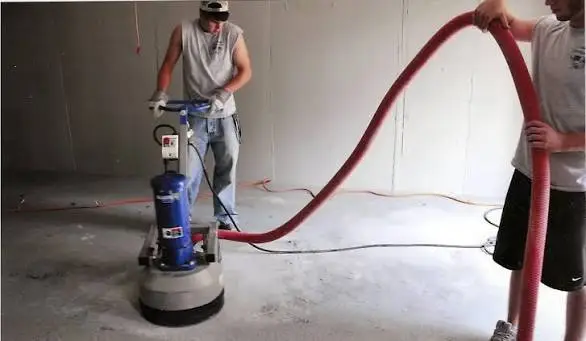
The most widely recommended method is diamond grinding. One epoxy supplier puts it plainly: “Diamond grinding is the default method.” Grinding strips away weak surface concrete, old paint, curing compounds and light contamination that would otherwise interfere with adhesion. Contractors also favor it over acid etching, which one installer calls often inconsistent, while grinding gives dependable adhesion.
Grinding is only half the job, though. A garage-floor installer stresses that “the removal of all dust that is created is vital”, because the epoxy needs to soak into the concrete to form a strong bond. After vacuuming, cracks, divots and spalled areas should be repaired so the floor is as uniform as possible before coating.
One more residential wrinkle: shot blasting, the heavy-duty commercial method, is generally not recommended for garage floors because it can leave faint “lawnmower lines” that telegraph through the finished surface. Homeowners care about the look as much as the durability, so a finer, more even grind usually wins.
Commercial Floors: Profile, Moisture and Contamination
Commercial and industrial floors face forklifts, chemical spills, constant foot traffic and tight schedules, so preparation is more technical and more standardized. The key concept is the Concrete Surface Profile (CSP), a scale from 1 (smoothest) to 9 (roughest) that measures how textured the prepared concrete is. The required CSP is usually specified by the coating manufacturer, and the equipment is chosen to match it. Grinding typically suits the low end of the scale, while mid-range profiles are often best achieved by shot blasting, which cleans and profiles in a single pass. High-build and heavy-duty systems may call for a CSP 3 or higher, achieved with heavy shot blasting or scarifying.
Why does this matter so much? One commercial specifier’s guide states that “Service life is dominated by surface preparation more than topcoat selection.” Cutting corners on prep, in other words, shortens the life of even a premium system.
Moisture is the other big commercial concern. One industry article notes that “Epoxy will only adhere correctly to a dry floor”, so plant managers should confirm the flooring team has tested moisture levels and compensated where needed. Oil deposits are another warning sign in industrial settings, since contamination can lead to coating failure. Grinding or blasting removes surface contaminants, but deep oil penetration may need chemical degreasing or, in extreme cases, slab replacement.
Finally, dust control and downtime shape commercial prep. Shot blasters recover their own steel shot and vacuum as they work, which keeps dust down and workers safer, and their speed matters when every hour of a shutdown costs money.
Key Differences at a Glance
In a home, the priorities are appearance, a clean bond and tidy repairs, which usually means diamond grinding on a modest area. In a commercial facility, the priorities are a specified CSP, verified moisture levels, contaminant removal and fast turnaround, which often means shot blasting across a large slab.
The Bottom Line
Both settings share one rule: no shortcut makes up for poor preparation. Skip the profile, the dust removal or the moisture check, and the best epoxy on the market can still fail. Whatever the location, budget time and money for the prep first, and the coating will take care of itself.